By The Squeegee Crew · June 20, 2026 · 7 min read
What Christmas Light Installation Costs in Ventura and SLO
Most full-service Christmas light installation costs between roughly $500 and $2,500 for a typical 805 home, with single-story and modest two-story houses usually landing in the $800 to $1,500 range. That figure is quoted per home, not sold as a flat package, because no two rooflines in Ventura or San Luis Obispo are the same length. The price covers design, the lights themselves, professional installation, maintenance through the season, and takedown in January.
The reason for the spread comes down to how much house you are lighting and how you want it to look. A clean single run of C9 bulbs along a one-story roofline in Camarillo sits at the low end. A two-story Spanish home in Santa Barbara with wrapped palms, lit hedges, and bulbs traced around every gable runs higher. We break down every price driver below so the number on your quote makes sense.
One thing worth saying up front: christmas light installation cost is almost never a single sticker price you can look up online. Reputable installers walk or measure your roofline, count stories and trees, and price the job to your home. A company that quotes a flat rate over the phone without seeing the house is guessing, and that guess usually gets corrected upward on install day.
What a Full-Service Install Actually Includes
A full-service install covers five things: design, lights, installation, in-season maintenance, and takedown with storage. You are not renting a ladder and a box of strands. You are hiring a crew to handle the whole season, from the first measurement to the last bulb packed away in January.
Design comes first. Before anything goes up, we look at your rooflines, peaks, windows, columns, and trees, then map out what will actually look good on your specific house. Next we cut and size commercial-grade lights to your measurements, so each run ends exactly at the corner instead of dangling six feet short or bunching up long.
Installation uses proper clips rated for your roofline and gutters, never staples or nails. Through the season, if a run goes dark or a bulb fails, we come back and fix it at no extra charge, because a string of dead lights on your roof is our problem, not yours. Then in January we take everything down, label it, and store it until next year, so your garage stays clear and the set is ready to go for the next season.
The storage piece matters more than people expect. Commercial-grade lights custom-cut to your home are an investment, and tangled bins in a hot garage kill them fast. When the installer stores your set, the same lights come back year after year, and your second season is usually cheaper than your first because the materials are already made.
What Drives the Price of Your Quote
Four things drive Christmas light installation cost: roofline length, number of stories, how many trees and bushes you want lit, and design complexity. Every quote is built from those four, which is why pricing is per home instead of one flat rate.
Roofline length is the biggest single factor. More linear feet of roof means more lights, more clips, and more labor, so a sprawling single-story home can cost as much as a compact two-story. Number of stories is next, because a second or third story means taller ladders, more setup, and more time working at height, all of which is priced into the job.
Trees and bushes add up quickly. Wrapping a single tall palm or a row of hedges takes far more light and labor per foot than a straight roofline run, so heavy landscape lighting can move a quote several hundred dollars. Design complexity is the last driver: a simple warm-white roofline is one price, while mixing C9 bulbs on the roof, mini lights in the bushes, wrapped trunks, and lit columns is another.
This is also why running the same design two years in a row gets cheaper. The lights are already cut to your home and stored, so year two is mostly installation and takedown labor without the materials cost. Ask any installer how repeat-season pricing works before you sign.
Why You Should Book Early in the Fall
Book your install in September or October, because install dates fill up fast and the best slots go first. A quality crew can only put up so many homes between early November and mid-December, and in the 805 those calendars are usually full by Thanksgiving.
Booking early does more than reserve a date. It gives the installer time to design your layout, order and cut materials to your measurements, and schedule your install for the week you actually want the lights on, whether that is right after Halloween or the first weekend of December. Wait until December and you are choosing from whatever dates are left.
There is a pricing angle too. Some installers offer early-bird rates in the fall, and materials are easier to source before the December rush. The homeowners who call in mid-December looking for last-minute lights either pay a premium or get told the crew is booked until next year.
Why the 805 Is Built for Christmas Lights
Mild 805 winters make for one of the longest, most comfortable lighting seasons in the country. December nights in Ventura, Santa Barbara, and San Luis Obispo sit in the 40s and 50s with little rain, so lights that go up in early November can stay lit and looking sharp straight through New Year's, with no ice, snow load, or freeze damage.
That long season is why so many 805 neighborhoods go all-in. Streets in Ventura, Thousand Oaks, and SLO turn into destinations every December, with whole blocks lighting up rooflines, palms, and hedges. When your neighbors go big, a half-hearted string of lights stands out for the wrong reason, and a clean professional install fits right in.
The climate also protects your investment. In snow country, ice and freeze-thaw cycles wreck lights and clips every winter. Here, the same commercial-grade set can last many seasons because it never takes that beating, which stretches the value of what you pay for the first install.
Commercial-Grade Lights vs. Store-Bought Strands
Commercial-grade lights last years where store-bought strands last a season or two. The difference is in the wire gauge, the bulb sockets, and the connectors: commercial sets use thicker wire, sealed sockets, and heavier plugs built to sit outside for two months at a time, while boxed strands from a big-box store are built to a price and fade or fail fast in sun and weather.
The clips matter just as much as the lights. Professional installs use clips sized for your specific shingles and gutters, which hold the line exactly where it should sit and come off in January without damage. Staples, nails, and cheap universal clips crack shingles, bend gutters, and leave holes that leak, and those repairs cost far more than the lights ever did.
There is also the look. Commercial-grade bulbs hold a consistent color and brightness across the whole run, so your roofline reads as one clean line instead of a patchwork of dim and mismatched bulbs. That consistency is the difference between a home that looks professionally done and one that looks like three different kits stapled together.
C9, Mini, and Bulb Options at a Glance
The three common choices are C9 bulbs, mini lights, and specialty bulbs, and each has a job. C9s are the classic large teardrop bulbs you picture on a roofline: big, bright, evenly spaced, and readable from the street. They are the workhorse of most residential roof runs.
Mini lights are the small, densely spaced lights best for wrapping trees, trunks, and bushes, where you want a dense sparkle rather than distinct bulbs. Many homes mix the two: C9s on the roofline for structure and mini lights in the landscape for depth.
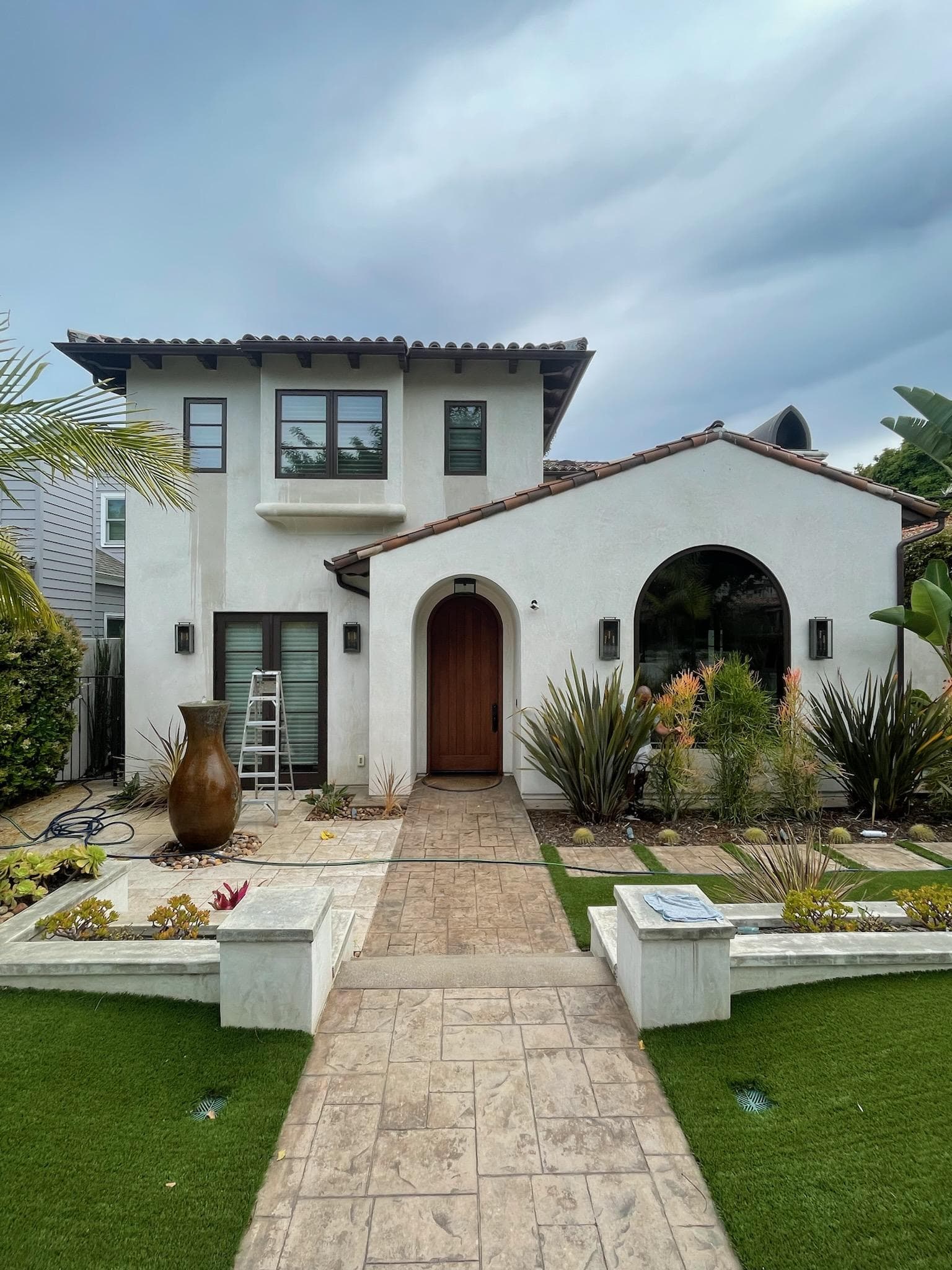
Beyond those, there are warm-white versus cool-white choices, color options, and specialty bulbs for specific looks. A good installer talks through these with you during design rather than handing you a catalog, because the right mix depends on your home's style and what your street already looks like. A Spanish tile home in Santa Barbara and a modern build in SLO usually call for different setups.
Safety and What to Look for in a Provider
The biggest reason to hire out is simple: you never touch a ladder or set foot on the roof. Every December, emergency rooms fill up with falls from roofs and ladders during light hanging, and a two-story roofline in wet or windy conditions is genuinely dangerous. A professional crew carries the right ladders, harnesses, and experience so that risk stays off your shoulders.
When you pick a provider, check that they are insured, that they use and store commercial-grade lights, and that in-season maintenance is included in the quote. Ask whether the price covers takedown and storage, or whether those are add-ons that show up later. Get the quote in writing, per home, with the design spelled out.
Local matters too. A crew that works the 805 year-round knows the housing here, from Spanish tile and stucco to modern builds, and is around in January to take the lights down and back next season to put them up again. The Squeegee Crew installs, maintains, takes down, and stores holiday lighting across Ventura, Santa Barbara, and San Luis Obispo counties. We are insured, open 24/7, and rated 4.9 stars across 190-plus reviews. Call (805) 601-7591 for a per-home quote before fall dates fill up.